Oleksandr Kuzmenko, EditorPublished 4 min readAI-assisted · editor-reviewed
TL;DR
- Claude can effectively reason about low-level serial byte patterns, register maps, and binary packet structures.
- Generic, low-cost microcontroller boards can substitute for rare, proprietary diagnostic hardware when paired with LLM-assisted protocol decoding.
- LLM-generated code interacting with physical hardware must be treated as untrusted and isolated from write access to safety-critical actuators.
Key facts
- Hardware cost
- $15
- Target hardware
- 1994 Jeep Cherokee ECU
- Core objective
- Diagnostic telemetry and emissions compliance
Source: Key facts — Hardware cost
Source: Key facts. Hardware cost: $15. Each figure is copied from the story.
- Hardware cost$15
Embedded Reverse Engineering with LLMs
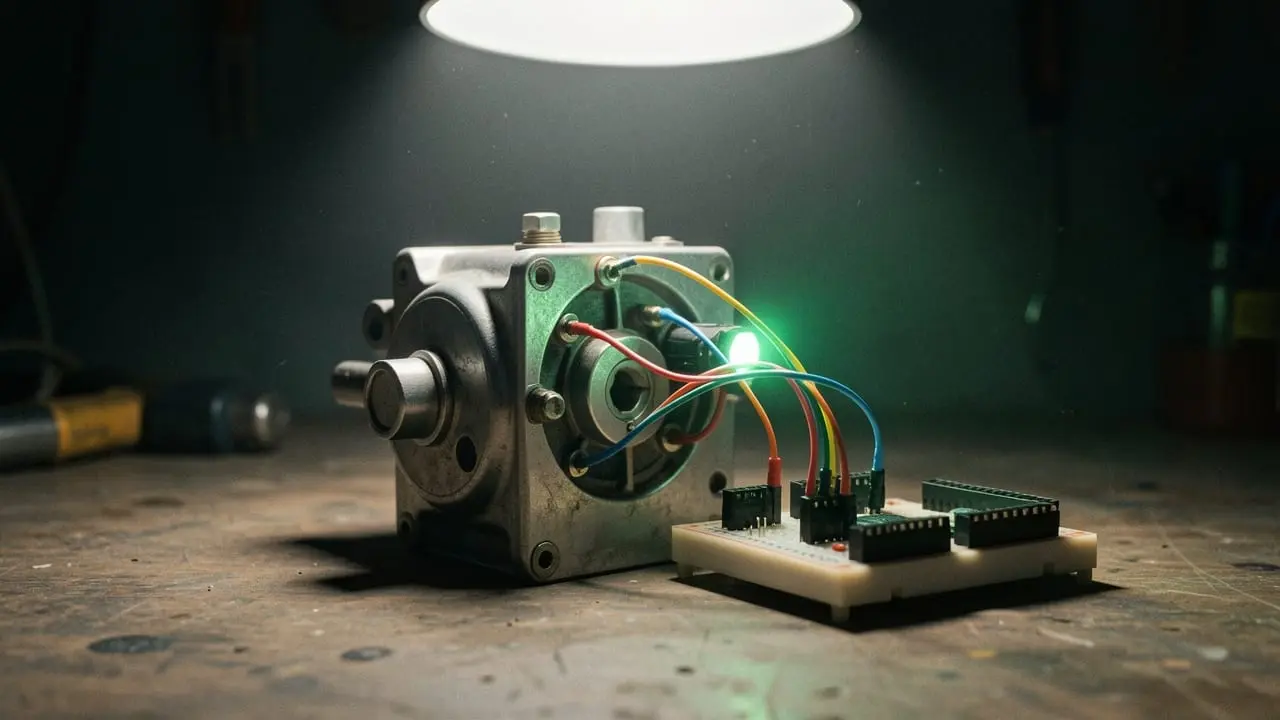
Modern large language models are increasingly viable assistants for low-level systems programming and hardware reverse engineering. An enthusiast successfully used Claude alongside $15 in generic hardware components to interface with the 32-year-old Engine Control Unit (ECU) of a 1994 Jeep Cherokee. The setup decoded legacy diagnostic routines and sensor readings required to tune the vehicle and pass California smog compliance tests without proprietary dealership scanners.
Practical Implications for Hardware Vibe Coding
This workflow highlights a growing capability: developers feeding register dumps, pinout diagrams, and raw serial logs into Claude to rapidly reconstruct communication schemas. Instead of manually disassembling machine code over weeks, developers can prompt an agentic model to hypothesize baud rates, packet structures, and checksum algorithms from sample byte sequences, transforming legacy hardware maintenance into an interactive vibe-coding workflow.
When to use
- Analyzing undocumented serial or SPI data streams from vintage microcontrollers.
- Prototyping custom diagnostic scripts for hardware lacking official SDKs or tools.
What to do today
- Capture raw logic analyzer or UART dumps before querying Claude to avoid hallucinated protocol timings.
- Restrict initial hardware interface scripts to read-only polling to protect legacy memory chips from corruption.
Step names are taken from What to do today.
Step names are taken from What to do today. Capture raw logic analyzer or UART dumps before querying Claude to avoid hallucinated protocol timings.. Restrict initial hardware interface scripts to read-only polling to protect legacy memory chips from corruption.
- Capture raw logic analyzer or UART dumps before querying Claude to avoid hallucinated protocol timings.
- Restrict initial hardware interface scripts to read-only polling to protect legacy memory chips from corruption.