Vibe coding workflow
Building Procedural 3D Applications Purely via Claude Code Agent Workflows
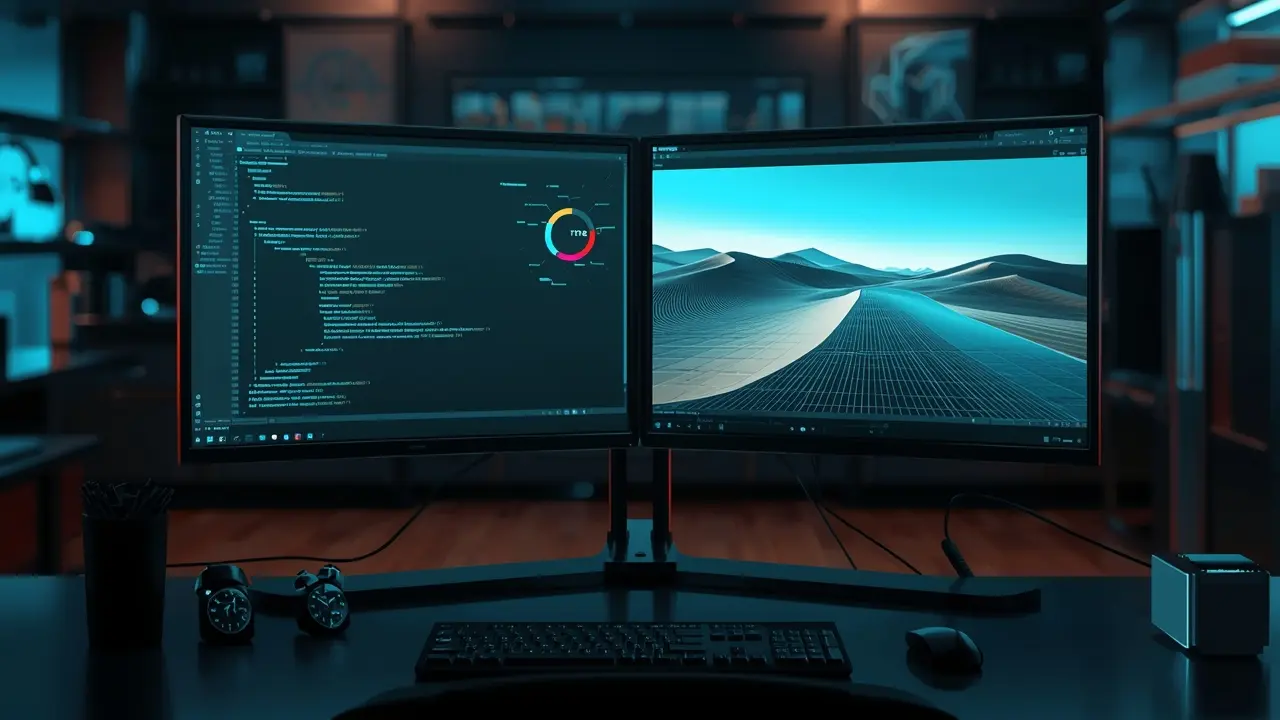
A developer constructed a full procedural desert explorer application using Claude Code without manually editing source files. The workflow demonstrates how agentic IDEs handle complex math, procedural generation, and graphics logic through structured prompts.
July 27, 2026 3 min read
AI-assisted · editor-reviewedHow we use AI
Impact: Medium
Why it matters
Developers can adopt prompt-driven vibe coding for complete procedural generation projects without writing boilerplates by hand.
TL;DR
- 01Claude Code can manage end-to-end procedural graphics and interactive application architecture.
- 02Incremental modular prompts prevent context confusion during long agentic coding sessions.
Full Vibe-Coding Procedural Generation
A practical demonstration showcases a procedural desert exploration application built entirely through Claude Code without direct manual code edits. The project relied on the agent to construct geometry logic, camera controls, and procedural rendering algorithms.
Agent Workflow for Complex Interactive Apps
- Incremental Prompting: Breaking procedural generation into distinct modules (terrain, lighting, navigation).
- Automated Verification: Allowing Claude Code to run local build commands and fix syntax or logic errors autonomously.
- Architectural Control: Guiding file layout explicitly to prevent large monolithic files.
✓ When to use
- Rapid prototyping of 3D graphics or procedural tools
- Testing Claude Code capabilities on complex zero-boilerplate projects
✕ When NOT to use
- Mission-critical production enterprise software requiring strict safety proofs
What to do today
- Break complex app builds into isolated sub-modules before handing tasks to agentic IDEs.
Sources