Oleksandr Kuzmenko, EditorPublished 7 min readAI-assisted · editor-reviewed
TL;DR
- Klad allows AI agents to paint via deterministic CLI commands instead of generating flat raster images.
- Drawings are stored as plain Git-friendly files where every stroke path, pressure, and color remains individually editable.
- Includes integrated sprite sheet generators and direct exports to Godot SpriteFrames.
Key facts
- Licensing Model
- Source-available (free for <€500k revenue); MIT format/skills
- Platform Support
- macOS (pen pressure/tilt), Linux, Windows
- Export Targets
- PNG, sprite sheets, Godot SpriteFrames
Eliminating the Diffusion Reroll Loop
Unlike traditional text-to-image pipelines that produce flat pixel rasters, Klad stores every stroke and fill as inspectable vector-like data while maintaining natural oil paint ridges, smudges, and blending behaviors. An agent like Claude Code or Codex generates artwork by executing JSON operations against the CLI. If an agent-generated sprite needs adjustments, you select the specific path (S to select, A to bend) or run a command like klad set art.klad c4:s12 size=3.5 color=#3355aa rather than reprompting from scratch.
Collaborative Canvas via CLI and Human Pen
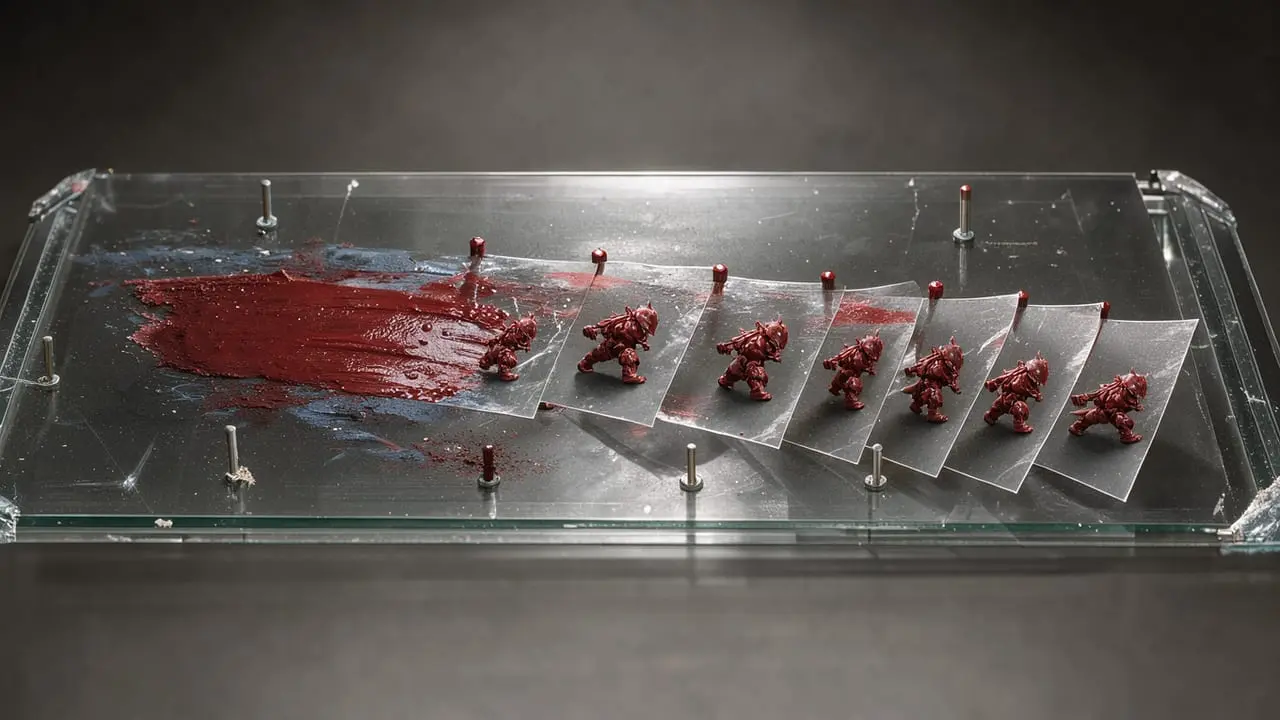
Klad runs as a native desktop editor alongside a companion command-line utility. A human artist can pin notes on canvas regions (N) or select elements while the agent reads notes via klad notes or klad selection. In an author-provided demo, Claude Fable 5.2 painted a 4,344-stroke creature, grouped parts into five layers, and generated 205 keyframe transforms without repainting static assets. Built-in interpolation handles in-betweens:
klad inbetween creature.klad --layers lines,colour --from 3 --to 5 --spacing in-out
klad export creature.klad --godot ../game/artFormats, Licensing, and Setup
The underlying binary compiles with Rust via cargo and just. Document bundles consist of plain files suitable for Git version control. The core file format and agent skills (klad skill and klad skill drawing) are licensed under MIT. The application binary uses a source-available license that is free for personal use and for businesses earning under €500,000 annually.
Try it in 2 minutes
git clone https://github.com/klad-app/klad && cd klad
just compile
target/release/klad install
klad open scene.klad
When to use
- Generating 2D game assets, sprites, and frame-by-frame animation clips for Godot.
- Pairing Claude Code or terminal agents with human illustrators for collaborative artwork.
- Workflows requiring fine-grained path adjustments rather than uncontrollable diffusion rerolls.
When NOT to use
- You need photorealistic imagery or complex 3D rendering pipelines.
- Your project cannot use Rust-compiled native binaries on local workstations.
- Your company revenue exceeds €500,000 without acquiring a commercial license.
What to do today
- Clone and compile Klad locally using `git clone https://github.com/klad-app/klad && cd klad && just compile`.
- Install the binary to your system PATH with `target/release/klad install` so agents can access it.
- Inspect the prompt architecture in your agent by executing `klad skill` and `klad skill drawing`.
Step names are taken from What to do today.
Step names are taken from What to do today. Clone and compile Klad locally using `git clone https://github.com/klad-app/klad && cd klad && just compile`.. Install the binary to your system PATH with `target/release/klad install` so agents can access it.. Inspect the prompt architecture in your agent by executing `klad skill` and `klad skill drawing`.
- Clone and compile Klad locally using `git clone https://github.com/klad-app/klad && cd klad && just compile`.
- Install the binary to your system PATH with `target/release/klad install` so agents can access it.
- Inspect the prompt architecture in your agent by executing `klad skill` and `klad skill drawing`.
What the community says
The underlying engine is not just vectors: a brush stroke is saved as data, and everything is rendered on the fly into pixels. This means that things like smudging and paint blending is possible.
To me, it feels just about as fast as having a model code up a medium feature for an application. And that doesn't seem too strange, because I'm the end coding is kind of what it's doing with this app.