Anthropic Unveils Model Hardware Standard for AI Agent Physical Device Control
Anthropic introduced the Model Hardware Standard (MHS), an open research preview specification that enables AI agents to discover, configure, and control physical lab devices and hardware using Model Context Protocol (MCP) and CLI interfaces. Early implementations show setup times falling from weeks to hours and 99.3% success in automated quantum laser relocking.
Why it matters
Use MHS alongside MCP to standardise driver creation and hardware interaction primitives for autonomous physical agents.
TL;DR
- 01Anthropic MHS standardises hardware device drivers using Model Context Protocol (MCP) primitives.
- 02MHS reduces hardware automation setup time from weeks to hours while embedding physical safety limits.
- 03Real-world trials demonstrated 99.3% success in quantum laser stabilization workflows.
Key facts
- QuEra Relock Reliability
- 99.3% (695/700 successes)
- QuEra Relock Speed
- 10–14 seconds
- CMU Integration Time
- 8 hours (down from weeks)
- Residual Servo Error
- 1.55 mV (vs 15.7 mV human tune)
Standardizing Hardware Drivers with Model Context Protocol
The Model Hardware Standard defines standard interaction primitives (read, write, discovery) operating between an operating system and physical hardware devices. By routing discovery and state management through Model Context Protocol (MCP) servers and command-line interfaces, any AI agent harness can interact with hardware without proprietary vendor translation layers.
Quantifiable Automation Gains Across Labs
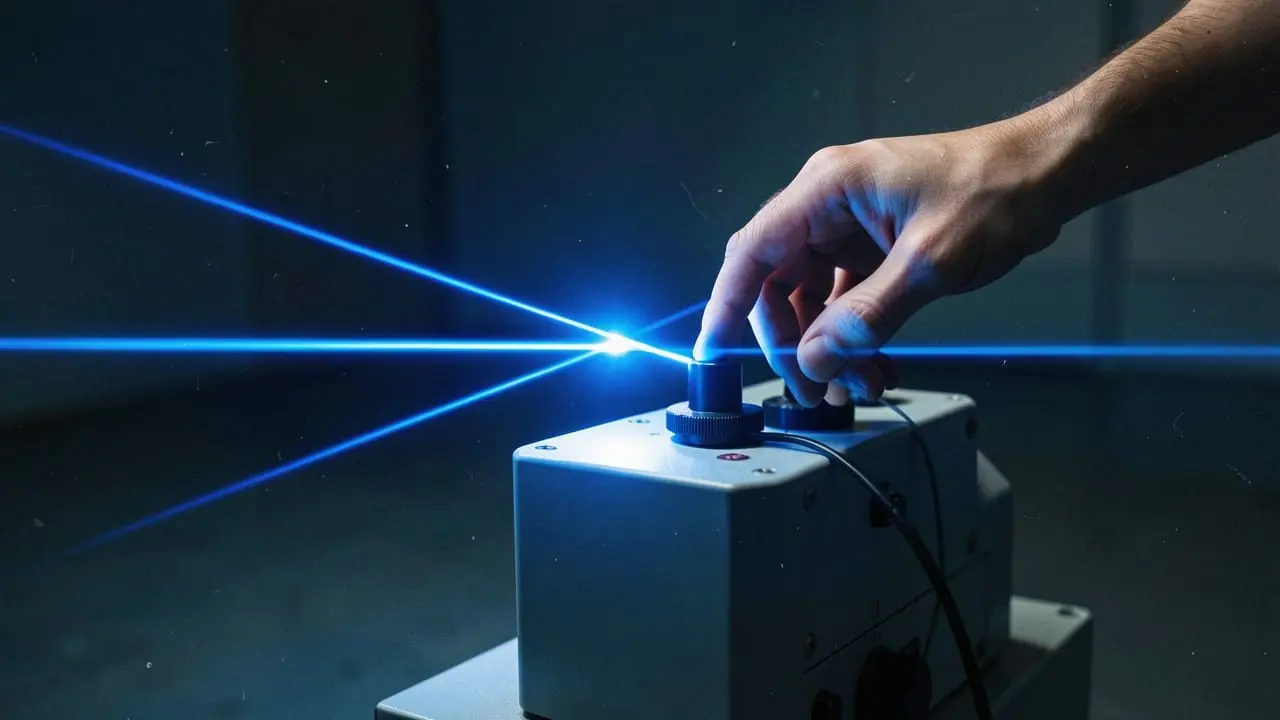
- QuEra Computing: Replaced human-written laser relock scripts (58% success at ~150s per attempt) with an MHS agent loop achieving 99.3% reliability (695/700 successes) at 10–14 seconds per execution, reducing residual servo error from 15.7 mV to 1.55 mV.
- Carnegie Mellon University: Automated a dose-response assay across a liquid handler, plate reader, and robotic arm across 3 computers in 8 hours (down from weeks), automatically blocking 6 induced physical fault conditions.
- Genentech: Automated BCA protein assay liquid transfer parameter tuning, achieving optimal transfer speeds (~140 µL/s for water at 0.016 RMSE).
Embedded Safety Limits
Safety bounds like motion range, speed, and force thresholds are compiled into the reference driver metadata rather than relying on LLM prompt compliance, ensuring hard safety guarantees during autonomous execution.
✓ When to use
- Building Model Context Protocol tools for hardware and IoT devices
- Enforcing deterministic hardware safety limits outside prompt context
✕ When NOT to use
- Fully autonomous physical operation without human safety supervision
- Purely virtual software workflows without physical device interaction
What to do today
- Review the MHS specification if building MCP integrations for physical sensors or hardware.
- Encapsulate physical safety limits in local driver definitions instead of agent prompt instructions.