Anthropic Multi-Agent Workflow Uses 60 Subagents and Lean Verification for Mathematical Proofs
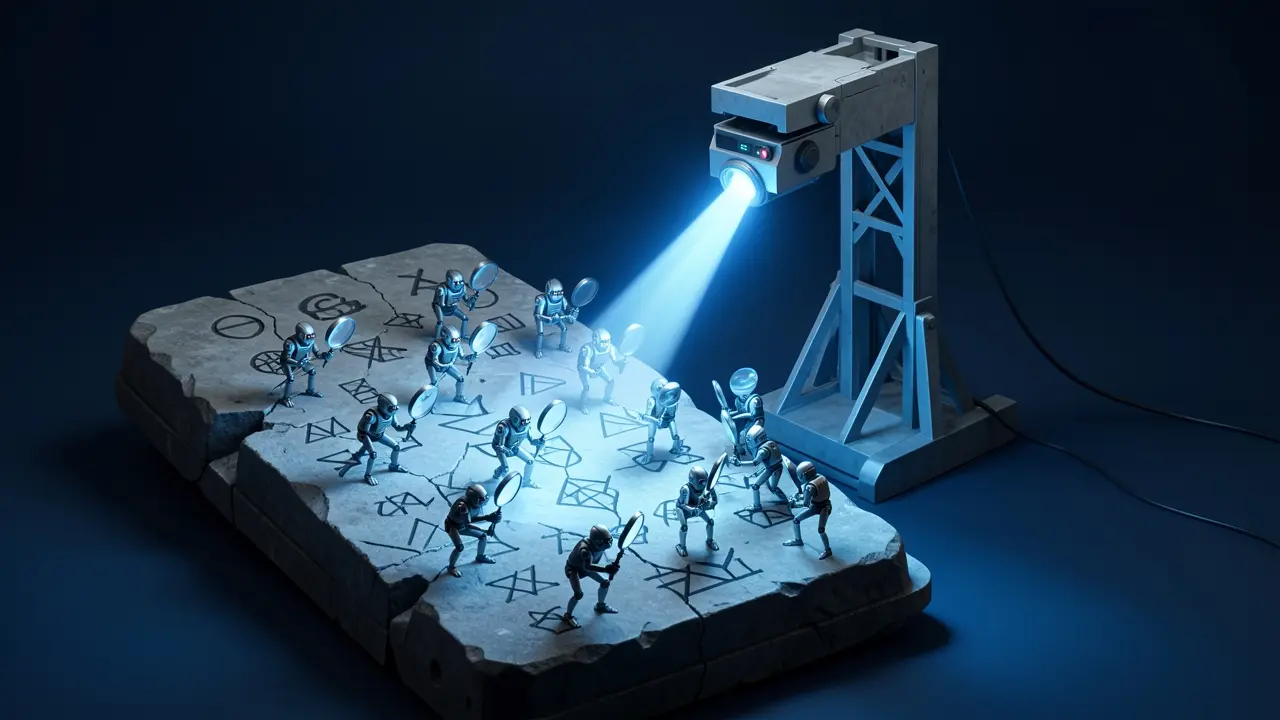
Anthropic deployed an experimental unreleased model across 60 specialized subagents to tackle the Riemann hypothesis. The multi-agent architecture spent 31 million tokens over 36 hours and verified generated results using the Lean proof assistant.
Why it matters
Demonstrates how decoupling task orchestration into exploration, validation, and writing agents paired with deterministic verification tools like Lean eliminates hallucinated logic in complex reasoning workflows.
TL;DR
- 01Decouple multi-agent workflows into distinct exploration and validation roles.
- 02Pair high-token LLM agent runs with programmatic code checkers like Lean to eliminate hallucinations.
- 03Expect heavy output token expenditure (30M+ tokens) for long-horizon autonomous tasks.
Key facts
- Total Subagents
- 60 agents
- Total Output Tokens
- 31M tokens
- Execution Runtime
- 36 hours (1.5 days)
- Ideas Tested
- 650 ideas
- Verification System
- Lean (open-source proof assistant)
Multi-Agent Subagent Architecture Breakdown
Anthropic details a 60-subagent hierarchy engineered to sustain reasoning over a 36-hour runtime:
2 idea generatorsresponsible for main core mathematical hypotheses.13 idea contributorsproviding supporting domain arguments.30 exploratory agentsattempting novel approaches (all failed, filtering bad paths).13 validator agentsperforming verification on step-by-step logic.2 paper writerscompiling formal output artifacts.
Deterministic Verification with Lean Proof Assistant
To prevent agent hallucinations from poisoning long context windows, Anthropic integrated the open-source Lean proof assistant into the loop. Agents translated proposed mathematical steps into Lean code, which provided objective pass/fail execution feedback.
Compute Scale and Token Consumption
Across 1.5 days of execution, the agent cluster consumed 31M output tokens while exploring 650 distinct candidate ideas. Human in-house mathematicians subsequently verified the Lean output, confirming valid lower-bound progress.
Try it in 2 minutes
# Example Lean 4 CLI setup for formal code / logic verification
elan self update && lake new proof_verifier math
cd proof_verifier && lake build
bash
✓ When to use
- Designing long-running multi-agent pipelines requiring zero tolerance for logic hallucinations
- Structuring subagent workflows with explicit generator and validator segregation
- Coupling LLM reasoning outputs with deterministic compilers, linters, or proof checkers
✕ When NOT to use
- Simple single-prompt tasks where token cost and execution latency must remain minimal
- Unstructured creative tasks lacking external deterministic programmatic evaluation
What to do today
- Integrate external CLI checkers or linters into agent loops to auto-reject invalid candidate outputs.
- Implement dedicated validator agent prompts separate from code generator agents in Claude Agent SDK workflows.