Anthropic and WHO Automate Complex Outbreak Reporting via Claude Skills
WHO AFRO data teams deployed custom Claude skills to extract, diff, and summarize case metrics across decentralized PowerPoint decks in the DRC. The pipeline cuts reporting time from a full day to under an hour.
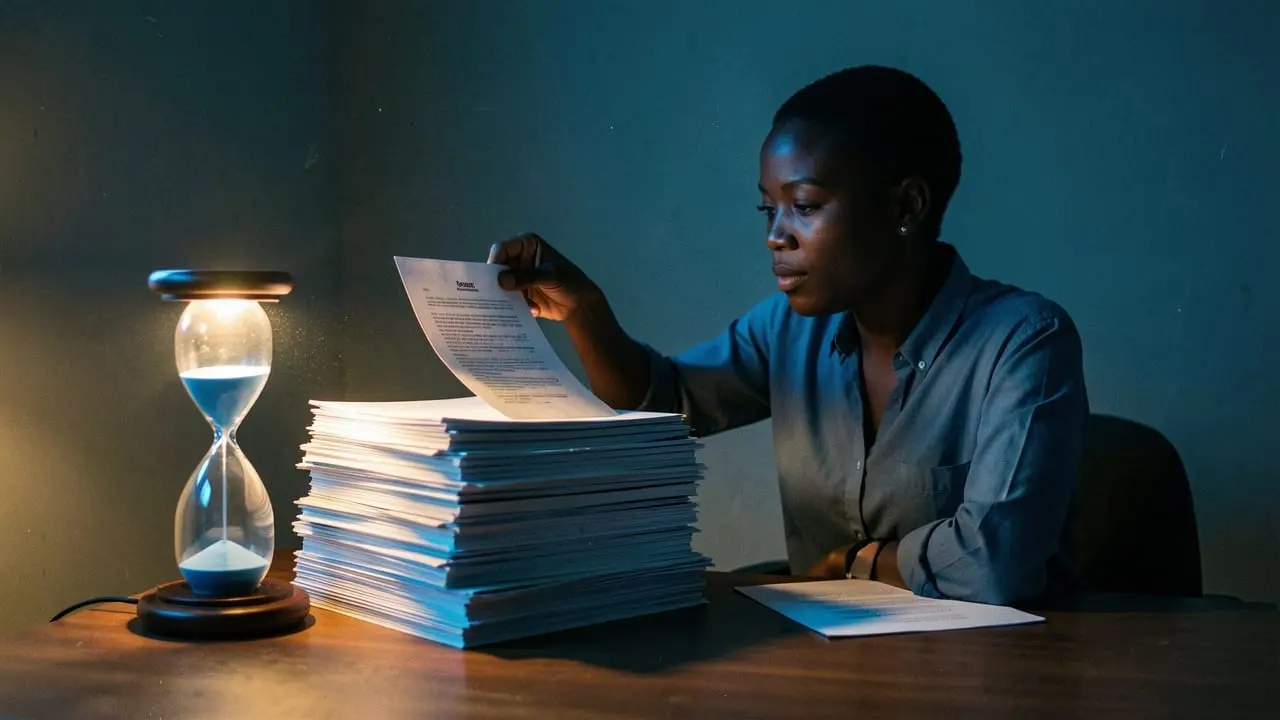
Impact: Medium
Why it matters
You can adapt this pattern to replace tedious daily slide deck synthesis with automated diff-checking skills.
TL;DR
- 01Claude skills can parse multi-source presentation decks and compute automated diffs against historical records.
- 02Batching epidemiological or business projection models concurrently removes single-thread analytical bottlenecks.
- 03Natural language workbenches like Claude Science eliminate command-line friction in specialized bioinformatics pipelines.
Key facts
- Report turnaround
- Reduced from all day to under 1 hour
- Cases tracked
- Nearly 8,000 confirmed BDBV cases
- Partners
- WHO AFRO, CEPI, INRB, Anthropic
Automated Slide Ingestion and Trend Diffing
In eastern Democratic Republic of the Congo, response teams combating the Bundibugyo Ebolavirus (BDBV) outbreak previously spent entire working days manually transcribing district case data from PowerPoint presentations into consolidated situation reports (sitreps). Data systems engineers at WHO AFRO—Tendai Muza, Tamayi Mlanda, and Gianni-Ferrari Donkor Muza—built a specialized Claude skill to automate this pipeline.
The skill instructs Claude to extract laboratory and case tallies from each health zone's deck, cross-reference them against the previous day's published figures, highlight anomalies or trend deviations with explanatory notes, and assemble the final summary. This transformed an all-day data entry process into an operational run that finishes in under 60 minutes.
Multi-Model Forecasting and Plain-Language Bioinformatics
Beyond document synthesis, the WHO AFRO analytics team expanded Claude into predictive modeling. Paul Ouma noted that severe time constraints previously forced analysts to rely on only one disease model. Claude allows analysts to execute and evaluate multiple predictive models concurrently, helping logisticians forecast hospital demand and decide where to construct treatment centers.
At the Institut National de Recherche Biomédicale (INRB), researchers deployed Claude Science to assemble viral genomes from raw sequencer fragments. Rather than typing specialized commands into a programmer's terminal to process millions of genetic fragments, researchers use natural language prompts to assemble the genome, construct virus family trees, and monitor mutations.
Try it in 2 minutes
# SitRep Auditor Skill Prompt
Parse the incoming district PowerPoint tables and cross-reference with yesterday's JSON baseline:
1. Extract total confirmed cases, new admissions, and fatalities per zone.
2. Compute absolute and percentage deltas against baseline metrics.
3. Flag any zone with >10% daily increase and append contextual hypothesis.
4. Output a consolidated markdown summary table and executive diff block.
markdown
✓ When to use
- Use when operational field data arrives trapped in human-formatted slide presentations or chat messages.
- Use when aggregating multi-district reporting streams that require automated anomaly and diff detection.
✕ When NOT to use
- Do not use when input source files follow rigid database schemas that can already be queried via deterministic SQL.
- Avoid using without human-in-the-loop verification in high-consequence medical or financial decisions.
What to do today
- Structure custom Claude skills with clear diff-checking rules when aggregating metrics across recurring slide decks.
- Keep final domain validation and action approval reserved for human experts rather than granting models write execution.
What the community says
“Probably one of the better real-world AI use cases I've seen. Automate the tedious data work, save hours, and keep the actual scientific decisions with experts.”
“Claude is helping the organization (people) react faster, and more accurately. The article mentions: you defeat Ebola by meeting it where it is now, not where it was.”
Sources