Oleksandr Kuzmenko, EditorPublished 5 min readAI-assisted · editor-reviewed
TL;DR
- Replaces fragmented terminal panes with a visual canvas that aggregates agent questions into a single 'Needs me' panel.
- Uses isolated MCP servers per session so CLI agents can read workspace context and spawn downstream tasks without direct DB access.
- Automates peer review loops across models before PRs reach human review.
Key facts
- Concurrent Sessions
- 10 to 20 agents and subagents
- Architecture Stack
- Electron, TypeScript, React Flow, SQLite
- Integration Layer
- Model Context Protocol (MCP), node-pty
Spatial Orchestration for Multi-Agent Workflows
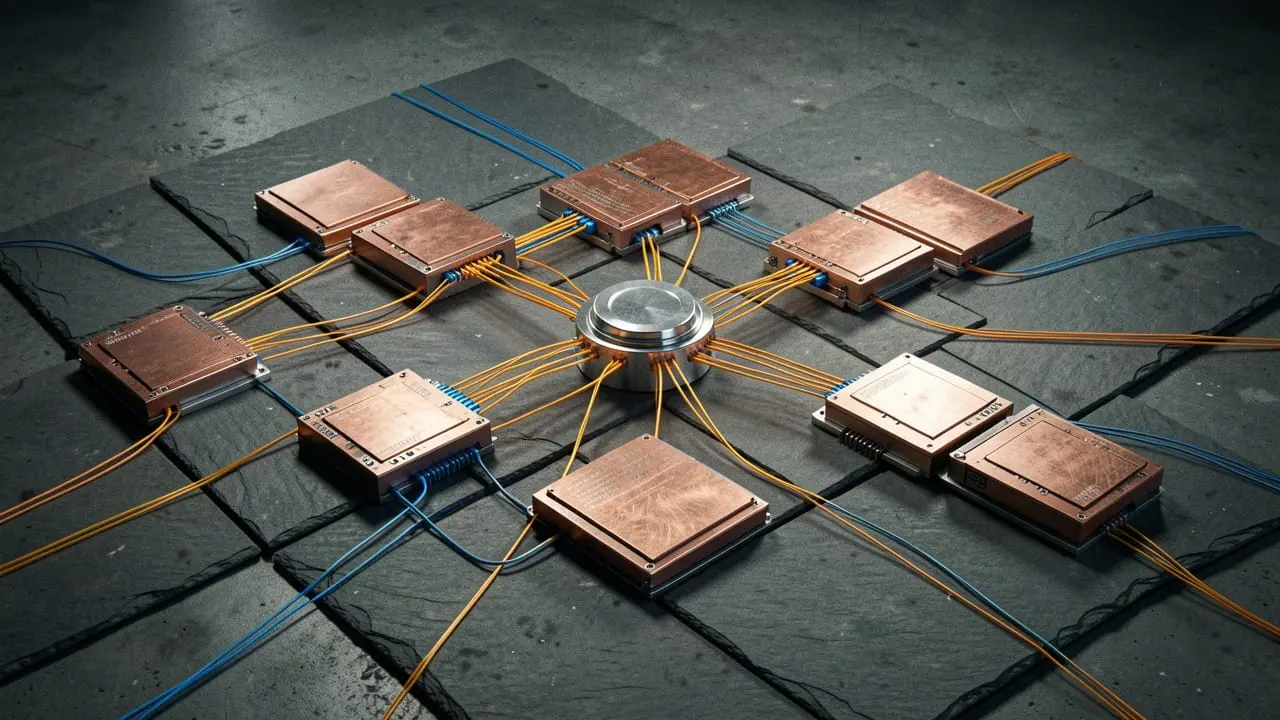
When scaling to 10–20 concurrent agent sessions, terminal multiplexers like tmux break down because identifying which agent is waiting on human input requires constant polling. Agentic Crafting Table replaces this with a spatial canvas built on Electron, TypeScript, and React Flow. Each project is mapped as a neighbourhood where issues, specs, pull requests, and CLI runs exist as interconnected nodes.
Local-First Architecture via Model Context Protocol
ACT runs real local instances of Claude Code and Codex CLI tools:
- Session Persistence: A background workspace daemon talks to a local SQLite database, while a separate supervisor process wraps
node-ptyandxterm.jsto preserve scrollback. - MCP Integration: Every agent session spawns a lightweight Model Context Protocol (MCP) server that interfaces with the workspace service, preventing agents from directly touching the underlying database.
- Review and Gate Automation: When an agent finishes writing code, ACT can trigger parallel review agents in Claude or Codex, route their findings back for revisions, and validate telemetry metrics before advancing deployment gates.
When to use
- When coordinating end-to-end features spanning multiple repositories, RFCs, and parallel review cycles.
- When orchestrating background Claude Code and Codex tasks that block on human decisions.
When NOT to use
- When running single-file quick edits where a standard IDE prompt is sufficient.
- On hardware with constrained memory, as running multiple concurrent CLI sessions and Electron canvases adds overhead.
What to do today
- Audit how many parallel Claude Code or Codex tasks you routinely run to assess orchestration overhead.
- Evaluate local canvas workflows using ACT to cluster context items like tickets, specs, and PRs.
Step names are taken from What to do today.
Step names are taken from What to do today. Audit how many parallel Claude Code or Codex tasks you routinely run to assess orchestration overhead.. Evaluate local canvas workflows using ACT to cluster context items like tickets, specs, and PRs.
- Audit how many parallel Claude Code or Codex tasks you routinely run to assess orchestration overhead.
- Evaluate local canvas workflows using ACT to cluster context items like tickets, specs, and PRs.